
In 2025, the APT supported national efforts in Bangladesh to establish an independent National Preventive Mechanism (NPM) pursuant to the Optional Protocol to the Convention against Torture (OPCAT). This process aimed to create a system of regular, independent oversight of places of detention, a core component of the APT’s prevention work around. Recent developments have reversed that progress. The repeal of the ordinance establishing the new National Human Rights Commission of Bangladesh (NHRC), which had also been designated as the NPM, has left Bangladesh without an independent preventive mechanism.
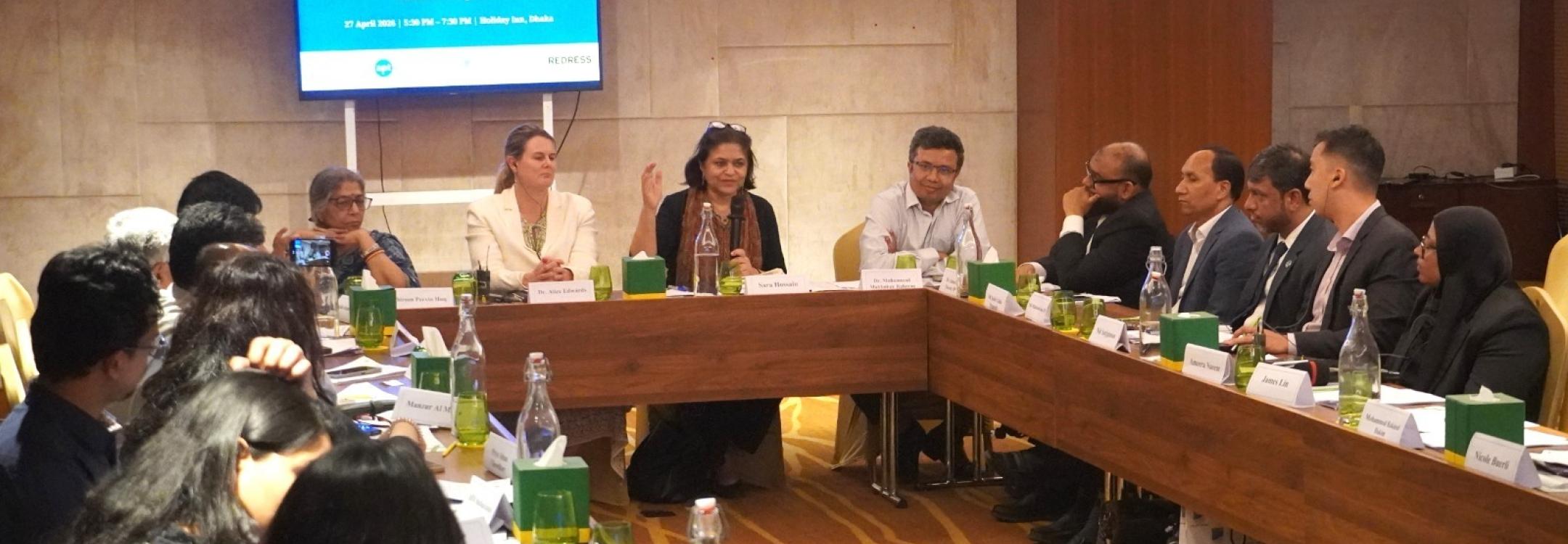
From 24 to 29 April 2026, APT, together with partners under the United Against Torture Consortium, and in collaboration with UN Special Rapporteur on Torture Dr Alice Edwards, carried out a mission to Bangladesh. The delegation included legal practitioners, doctors, and researchers. Through consultations, legal engagement, and advocacy, the mission examined current challenges and identified steps for reform.
Firstly, a two-day National Consultation hosted by local NGO Odhikar brought together the Law Minister, members of parliament from government and opposition, police, forensic experts, doctors, civil society, survivors of torture and their families. Day one focused on current challenges. Day two focused on solutions.
Participants raised several recurring issues. There is a strong reliance on confessions in criminal investigations, which can encourage coercion rather than evidence-based methods. The use of secret or unofficial detention facilities remains a serious concern. Basic safeguards at the moment of arrest are often not implemented. These include access to a lawyer, notification of a third party, and medical examination.
On everyone’s minds throughout the week was the concern about the lack of independent oversight. Participants referred to the repeal of the ordinance establishing a new NHRC, which had been designated as the NPM under OPCAT. The absence of such a body leaves a gap in the system.
On the second day, participants discussed reforms. APT contributed by outlining how the Méndez Principles can be applied in Bangladesh to improve the quality and reliability of information gathering, reduce reliance on confessions, and strengthen professionalism in policing. APT also presented options for re-establishing an NPM in line with OPCAT, including institutional design, safeguards for independence, and cooperation with civil society. These discussions linked the identified problems with concrete solutions.
APT and partners also held a legal workshop hosted by Bangladesh Legal Aid and Services Trust (BLAST). The workshop focused on prevention and accountability. It included a detailed discussion on the role of lawyers in applying the Méndez Principles in practice, including detecting signs of coercion, challenging the admissibility of statements, and requesting exclusion of evidence obtained through torture. The workshop also addressed how lawyers can advocate for stronger safeguards and support the establishment of an NPM.
APT also delivered a session on torture prevention to 25 interns at the Attorney General's Office of Bangladesh. The session introduced the Méndez Principles as a standard for future prosecutors and emphasised the responsibility to rely on lawful and reliable evidence. It also explained the function of NPMs under OPCAT and their role in strengthening the rule of law.
The mission included a briefing for embassies and international partners interested in supporting reform efforts. Discussions focused on how partners can assist Bangladesh in moving towards lawful, transparent, and evidence-based practices. This week confirmed that the situation in Bangladesh remains serious. At the same time, engagement across institutions, civil society, and affected communities shows that change is possible.
APT and its partners will continue to support efforts to strengthen safeguards, accountability, and oversight. The Méndez Principles and the establishment of an NPM under OPCAT provide clear and practical pathways for reform. With sustained commitment, Bangladesh can move towards a national system that prevents torture and ill-treatment.